
2. Ground

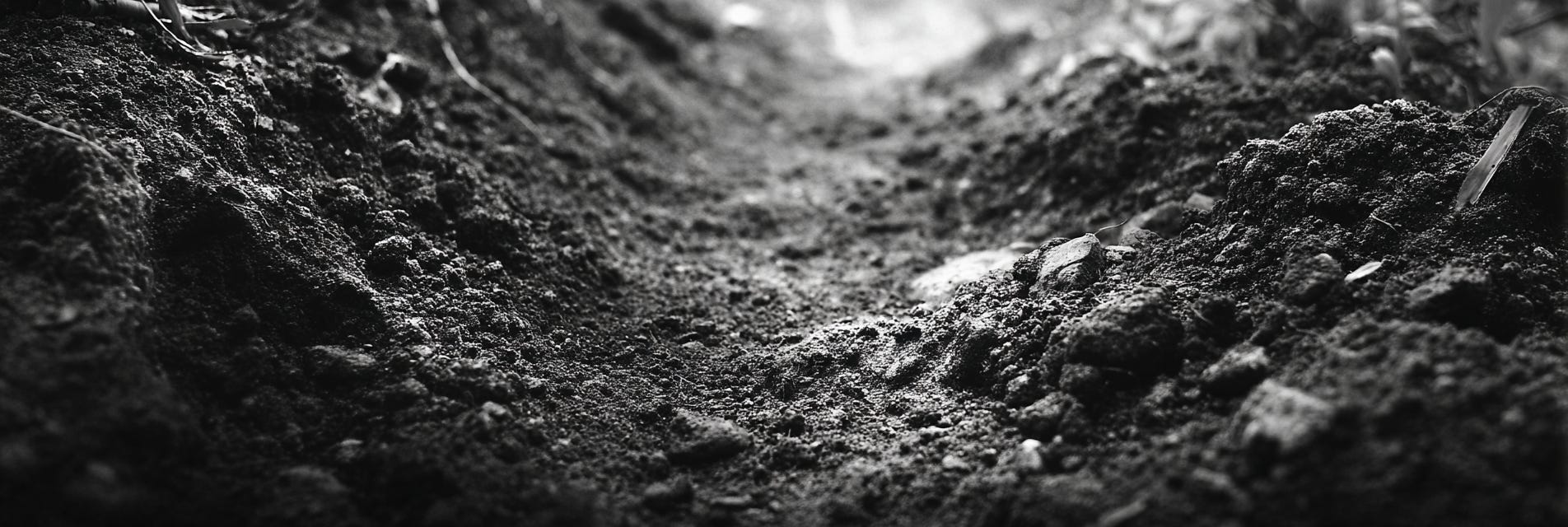
There’s a rhythm to impact.
Each step lands as both force and feedback, the earth receiving and returning what you give it.
Every runner knows the moment: not the first step or the last, but the one that happens when the mind drifts just far enough for the body to take over.
Some people call it “the zone.” I think it’s simpler than that.
It’s when gravity becomes partner, not opponent.
That’s Ground.
It’s where abstract meets actual, where momentum plus resistance equals forward progress.
In Light, rhythm belonged to the sun, rise and fall, day and night, cosmic, vast.
Here, rhythm belongs to the body, repetition, friction, response, intimate, personal.
Similar patterns, this one just closer to the dirt.
In running, Ground is feedback. It hurts, it humbles, but it’s always the teller of truth.
Ground never lies.
My first ultra was an eye-opener. The planned waypoints for rest and refuel weren’t the mini-salvations I had imagined. They were each their own small death, both corporeal: blisters, loss of skin, and psychological: a little piece of soul, the ache of leaving warmth, companionship, relative comfort, forcing motion until momentum could be regained.
The first mile after getting back on the trail felt like fire, actual searing pain.
Then, somewhere in that second mile, each time, my body accepted the contract.
Pain became signal, signal became rhythm. That’s when I started hearing what the trail was actually saying.
Ground is never the same twice.
It receives your weight and gives it back differently each time, soft under pine, sharp on scree, slick in mud, unyielding on stone.
Each surface speaks its own dialect, and you learn to listen through your feet.
Stride changes. Cadence adjusts. Effort redistributes.
You’re not fighting terrain, you’re negotiating with it.
You give, it answers, you adapt. That’s the conversation.
Ground speaks in a recursive loop.
Somewhere past the halfway point, I realized Ground was teaching the same lesson over and over: you can’t control conditions, only response.
If you fight feedback, you break.
If you listen, you move.
The rhythm becomes a loop, impact, feedback, adjustment, response, again and again.
A living circuit.
You start to feel the trail not as obstacle, but as pulse.
By the final miles, feedback softens, not because it hurts less, but because you’ve learned the dialect.
You know what every rock means, what every ache implies.
The mind stops arguing, the body starts translating.
This is why I call running my meditation.
At some point, all of your mind’s nonsense gives way, and you don’t think about running, you are running.
Ground gives back exactly what you offer.
Endurance is not toughness. It’s the resilience to quiet the mental demons so your body can understand, interpret, and respond to what the ground is giving you.
You can try, but you’ll never conquer the ground. You just have to meet it halfway.
If you consistently give it the energy you have, it will reliably give you the feedback you need to move forward.
Here’s to learning the language of terrain, of body, of feedback.
Here’s to the Ground, the quiet, honest teacher that turns pain into progress and motion into meaning.
Φ